
Supporting Local Farms for a Healthier Coast
Large scale industrial agriculture, including concentrated animal feeding operations (see CAFOs) can have significant impacts on water quality, public health, and the environment. At Coastal Carolina Riverwatch, we envision a collaborative, community centered food system, one where local farmers and consumers work together to protect our natural resources.
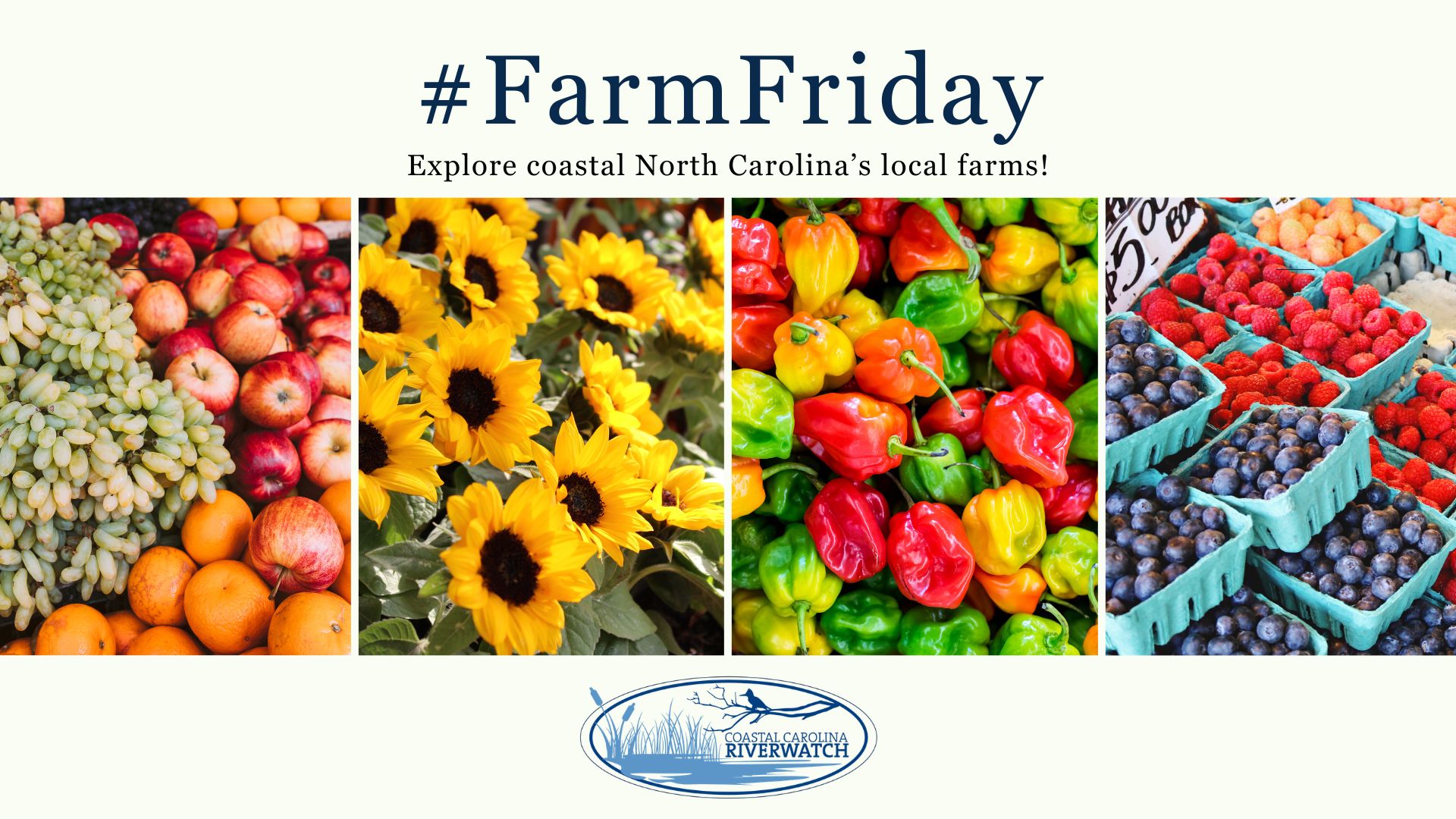
By building strong relationships with the people who grow our food, we create the transparency needed to make informed choices that support our health, our environment, and our local economy. To help highlight these alternatives, we launched our Farm Friday campaign.
What is Farm Friday?
Each week, CCRW spotlights a local farm on Facebook and Instagram. We share farmer submitted photos, insights into their sustainable practices, and highlights from visits to farm stands featuring the freshest seasonal finds. We also promote local markets where these goods are available year round.
Celebrating our Small Farmers
We are so grateful for the many benefits small and sustainable farms bring to our region, including protecting water quality and strengthening community resilience. Want to explore more local agriculture? Download the Visit NC Farms App to discover statewide resources, including what’s in season and where to find it.

Why Local Farms Matter
Explore the many ways local farms strengthen our environment, economy, and communities.
Environmental Benefits
- Lower emissions: Local food travels shorter distances, reducing greenhouse gases from transport and refrigeration.
- Reduced plastic waste: Small farms typically avoid single-use plastic packaging.
- Healthier growing practices: Many local farmers limit or avoid synthetic herbicides and pesticides.
- Better soil protection: Sustainable practices help control sediment runoff and protect waterways.
- Responsible animal care: Animal waste is often managed more effectively at smaller operations.
- Farmland preservation: Supporting local agriculture keeps working lands in production.
- Biodiversity: Small farms often grow a wider variety of crops and raise diverse livestock breeds.
Economic and Community Benefits
- Supports the local economy: Purchasing from local farms boosts local jobs and strengthens community resilience.
- More nutritious food: Products are harvested at peak freshness, often resulting in better flavor and nutrition.
- More equitable food systems: Local, small-scale farms offer alternatives to industrial operations that are often located in low-income, Black, Indigenous, and other marginalized communities.
Local farms benefit people, the planet, and the future of our coastal communities.
Local Farmers as Environmental Stewards
Many farmers in the White Oak River Basin take great care to protect our environment, support our communities, and steward the natural resources we all depend on. Their commitment to sustainable practices is reflected in their own words:
“Our farm borders the Bogue Sound so we believe it is our responsibility to be good stewards of the land, water, and air. We are doing everything we can to take care of the resources that take care of us and you.”– Farm at Bogue
“The Heart of a community is its food. It is the center of our gatherings, our practice of faith, our family, our lifeblood. Choosing Local, choosing fresh, choosing healthy is not just about local economy, it’s about choosing methods of sustainable practice that ensure our grandchildren and beyond will have the same access to a good life as those that came before us.”– Harlowe Custom Microgreens
Farm Friday Features!
Ocean Natural Farm – Watch our farm visit video here!
Are You a Local Farmer? Get featured on Farm Friday!
Coastal Carolina Riverwatch is always looking to highlight farms in the White Oak River Basin and surrounding areas that prioritize sustainable practices. We would love to tell your story.